
10 Easy Food Preparation Activities for Young Children
Food preparation is a wonderful way for children to practice independence, develop fine motor skills, and engage in practical life learning. With these activities, children can explore textures, learn basic kitchen skills, and build confidence. And the best part? They get to enjoy the delicious results of their efforts.
Target ages: 2 ½ and up

| Table of Contents |
| How Food Preparation Benefits Young Children Child-Friendly Tools for Food Preparation 10 Easy Food Preparation Activities for Children Additional Food Preparation Ideas Conclusion |
How Food Preparation Benefits Young Children
If you haven’t noticed yet, children love helping in the kitchen. And even though things may get a bit (or a lot!) messier, it’s important that we let them participate. Inviting children to help with food preparation is one of the most meaningful Practical Life activities we can offer at home. Simple tasks (washing fruit, slicing bananas, pouring water) become powerful opportunities for children to grow in independence, confidence, and coordination.
The reason children engage in activities like food preparation is very different from ours. As adults, we prepare food because we need to eat. For children, these tasks satisfy deep developmental needs. They are not focused on the end result; they are focused on the process.
For example, a young child may spend ten minutes carefully pouring water from one pitcher to another. They are not trying to quench their thirst, they are refining balance, precision, and motor control. The action itself is what matters, because it helps them build the skills they need to become more capable and independent.
In the kitchen, food preparation becomes the perfect environment for this kind of purposeful practice. Every movement has meaning and every step supports growth. These are just a few skills children learn through food preparation:
- Hand–eye coordination: Managing real tools strengthens precision and control.
- Concentration and focus: Food preparation encourages children to follow steps carefully, developing attention and patience.
- Fine motor skills: Through cutting, peeling, scooping, pouring and spreading.
- Independence: Children contribute to family life in real ways, which empowers them and builds self-esteem.
- Order and responsibility: Each activity naturally involves setup and clean-up.
- Grace and courtesy: Preparing food for others fosters empathy and care.
- Sensorial Exploration: Touching, smelling, and tasting ingredients enhances sensory awareness and engagement.
Teaching your children these abilities at a young age is an investment in their lifelong development, providing a rich foundation for learning, growth, and meaningful contribution to family life.
Child-Friendly Tools for Food Preparation
You don’t need a lot of tools to start cooking with your child, but a few well-chosen, child-sized items make all the difference. Children work best with tools that fit their hands, are safe to use and allow them to succeed. With just a few thoughtfully selected tools, you can transform your kitchen into a child-friendly Montessori Practical Life environment. Here are a few:
- Child-safe knife: A serrated toddler knife, nylon knife, or wavy chopper allows children to cut soft fruits and vegetables safely while practicing hand strength and control.
- Small cutting board: Lightweight and easy to handle, it helps children work comfortably and stay organized.
- Peeler: Child-sized, with a comfortable, non-slip handle and a protected blade, so your child can peel safely and confidently.
- Egg slicer and apple slicer: These tools aren’t necessary, but children often enjoy them. They also provide a sense of control and help develop coordination through clear, immediate results.
- Step stool or learning tower: Provides safe access to counters so children can participate fully without needing to be held.
When children have the right tools, they can focus on the process, explore their skills and gain confidence. You will be surprised at just how much your child is capable of!
10 Easy Food Preparation Activities for Children
In the following 10 food preparation activities, each task is set up with all the necessary tools and ingredients on a tray. This allows young children to focus on the activity itself, rather than worrying about anything that might be missing. As they gain experience and confidence, children can begin to gather the materials themselves and complete the tasks independently.
Another thing to keep in mind is that, when presenting these activities for the first time, it’s helpful to have two of each ingredient. You will use one to demonstrate the task, and your child will use the other to practice independently. For example, if the activity involves slicing an apple, you may want to have two apples: one for you to show the steps, and one for your child to try. This ensures the child can focus on learning the process without interruptions.
1. Slicing a Banana
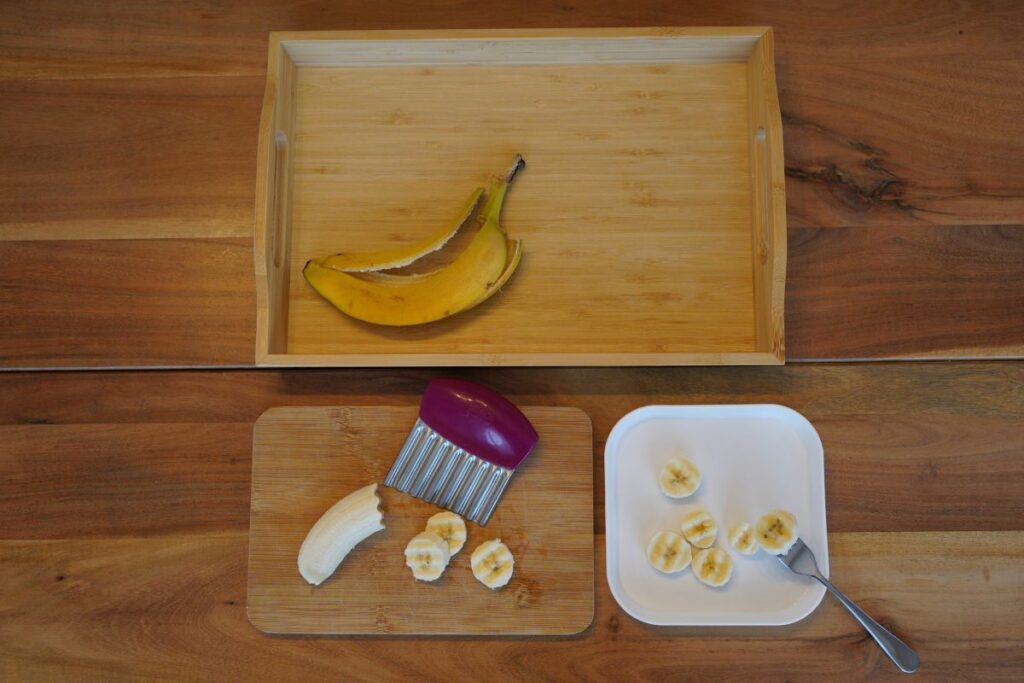
Materials:
- Tray
- Banana
- Small cutting board
- Child-safe knife
- Small Plate
- Small Fork
Presentation: Show your child how to peel the banana. Place the peeled banana on the cutting board and safely slice it into small pieces with the knife. Place the small pieces on the little plate to eat when finished.
2. Cracking Peanuts or Walnuts
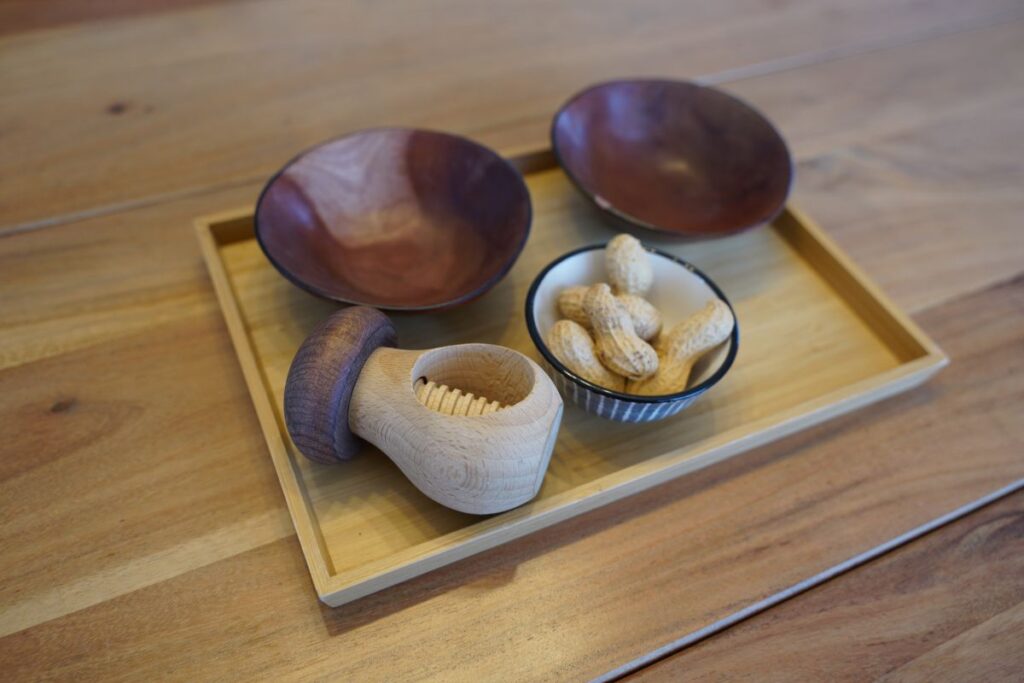
Materials:
- Tray
- Two medium bowls
- Nutcracker
- Small bowl
- Peanuts or walnuts
Presentation: Place one nut in the nutcracker. Squeeze it until the shell breaks. Place the shell on one bowl and the nut on the other bowl. Invite your child to repeat with the rest of the nuts.
Note: For young children I would suggest starting cracking peanuts instead of walnuts (if there are no allergies), since the shell is softer and easier to break.
3. Making Lemonade
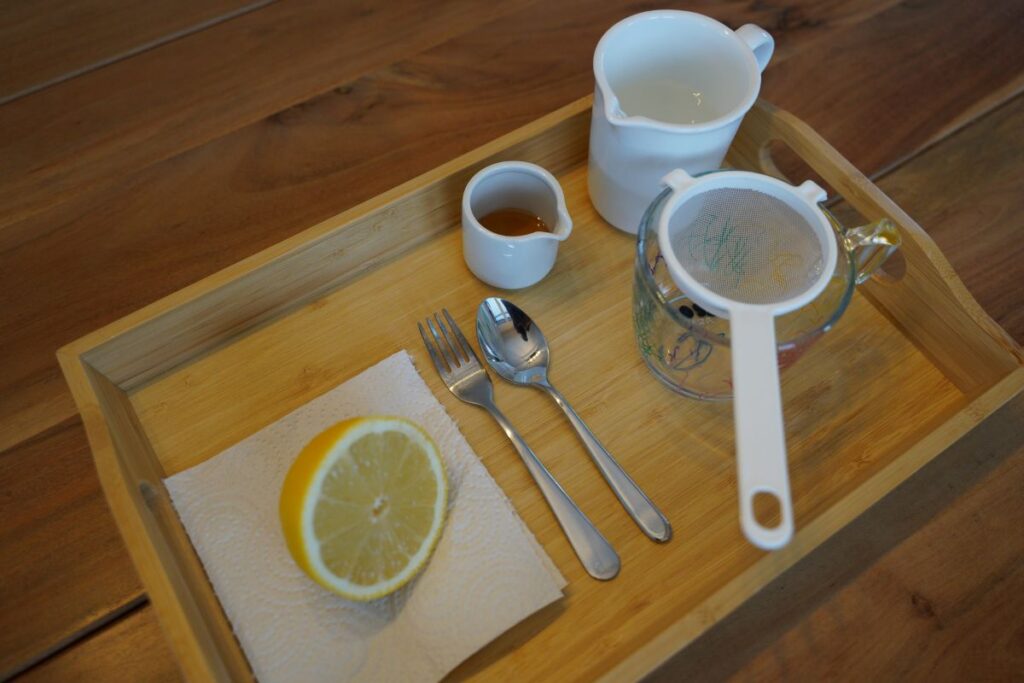
Materials:
- Tray
- Small fork
- Small spoon
- Cup
- Half a lemon
- Small pitcher with water
- Small container with honey
- Small sieve
- Napkin
Presentation: Place the strainer on top of the cup. Place the fork inside the half lemon and squeeze the juice on top of the strainer so that the seeds from the lemon stay on top. Move the fork back and forth to help extract the juice (if your child is very young they may need help here). Put the strainer away, take the pitcher and fill up the cup with water. Add the honey with the help of the spoon. Stir with the spoon and enjoy!
Note: If your child is old enough you can invite them to cut the lemon in half.
4. Making Guacamole
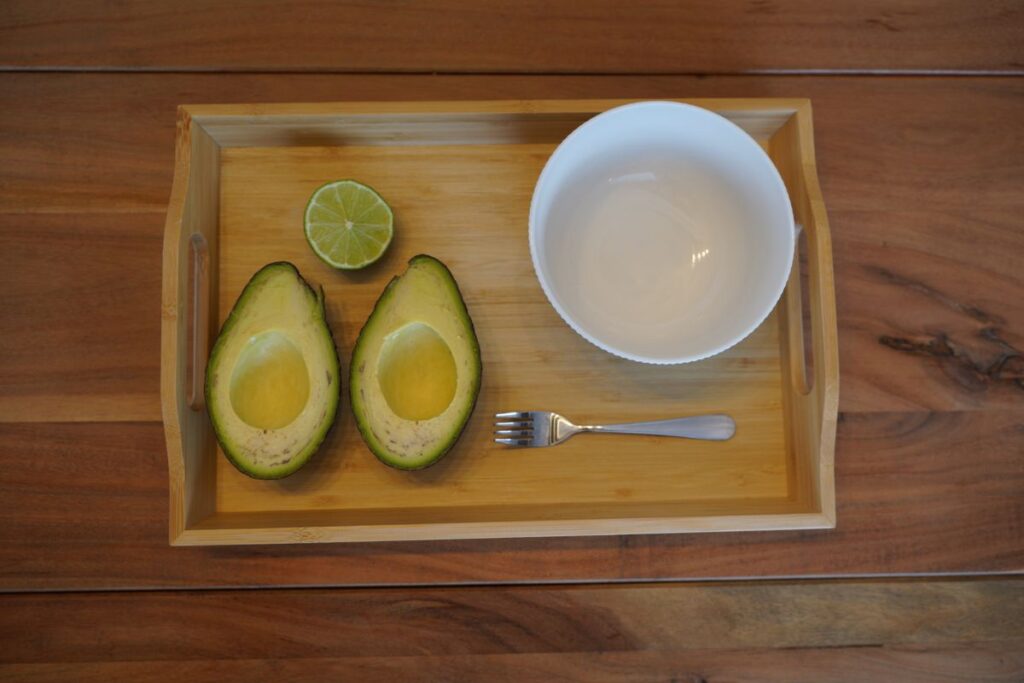
Materials:
- Tray
- Small fork
- One avocado cut in halves
- Half a lime
- Small bowl
Presentation: Take one avocado half, introduce the fork in between the flesh and the skin and release the flesh into the bowl. Invite your child to do the second half. Using the fork, show your child how to squeeze the lime by placing the fork inside the lime and moving it back and forth. Invite your child to mash the avocado and mix the lime in gently. You can serve it with crackers or bread to enjoy.
Note: If your child is old enough you can invite them to cut the avocado and lime.
5. Opening a Boiled Egg and Slicing It
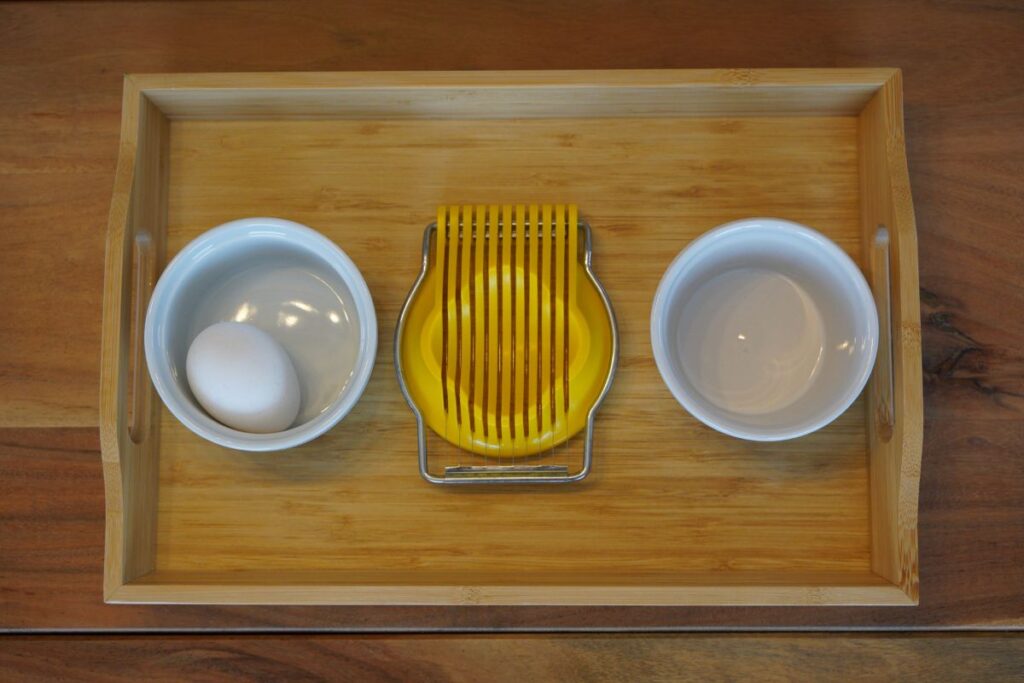
Materials:
- Tray
- Two bowls
- Egg slicer
- Boiled egg
Presentation: Show your child how to peel a boiled egg by first giving a little tap on the table to break the surface and then start peeling it with your fingers. Place the shell in one bowl. When done, cut the egg using the egg slicer and put the pieces in the other bowl.
6. Cutting an Apple
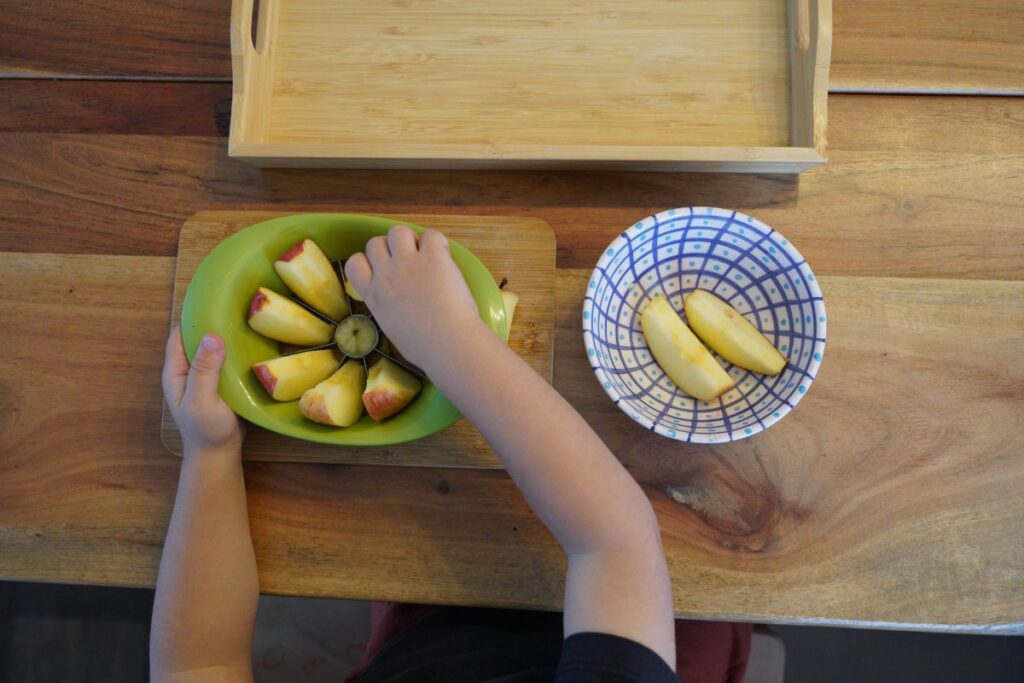
Materials:
- Tray
- Small cutting board
- Apple slicer
- Small bowl
- Apple
Presentation: Place the apple on the cutting board. Stand up, then place the apple slicer on top of the apple. Show your child how to use your body weight to safely and slowly slice into the apple. Sit back down on the chair and place the sliced apple pieces into the bowl.
7. Peeling Clementines

Materials:
- Tray
- Two medium bowls
- Clementine
Presentation: Show your child how to peel a clementine. Place the skin in one bowl and the wedges in the other one.
8. Peeling and Cutting a Cucumber

Materials:
- Tray
- Small cutting board
- Child-safe knife
- A peeler
- Medium bowl
- A long piece of cucumber
Presentation: Place the cucumber on the cutting board. Hold one edge of the cucumber with one hand and show your child how to slowly peel the cucumber with the peeler with the other hand. When done, show your child how to safely hold the knife and cut the cucumber into rounds. Place the cut pieces in the bowl to eat when finished.
9. Scooping Out Papaya or Melon Balls

Materials:
- Tray
- Papaya or melon cut in half
- A melon ball scoop
- Small fork
- Small bowl (for seeds)
- Medium bowl (for fruit pieces)
- Napkin
Presentation: Holding the papaya with one hand, scoop out the seeds with the scooper into the small bowl. Now, scoop out the meat and place the little balls in the medium sized bowl. Grab the fork and enjoy!
Note: If your child is old enough you can invite them to cut the papaya or melon in half.
10. Slicing Cheese with a Knife

Materials:
- Tray
- Small cutting board
- Small plate with 3 or 4 long sticks of cheese (I like Gouda)
- Small bowl
- Child-safe knife
Presentation: Place one cheese stick on the cutting board. Show your child how to safely hold the knife and cut small pieces of cheese placing them in the small bowl. Invite your child to cut the rest of the cheese sticks and place the pieces in the bowl to eat when finished.
Additional Food Preparation Ideas
There are countless opportunities for children to participate in the kitchen. If your child enjoys helping with meals or snacks, here are some more activities to try:
- Spreading: Spread butter, cream cheese or nut butter on bread or crackers.
- Peeling carrots: Peel carrots with a child-safe peeler.
- Shelling peas or beans: Remove peas from their pods.
- Pouring liquids: Pour water from a small pitcher into a cup.
- Scooping: Scoop yogurt, rice or cereal into a bowl.
- Juicing oranges: Use a manual juicer to juice oranges.
- Making infused water: Add sliced fruit to water.
- Grinding with a mortar and pestle: Grind nuts, herbs or sea salt.
These activities help children practice independence, coordination and focus while having fun in the kitchen.
Conclusion
Food preparation is one of the most powerful ways to bring Montessori into everyday family life. With a few child-sized tools and simple tasks, children feel trusted, capable and connected to the life of the home. In Montessori, independence grows through doing, and the kitchen is a beautiful place to begin!
Affiliate Disclaimer: Some links on this site are affiliate links. If you make a purchase, I may earn a small commission at no extra cost to you. As an Amazon Associate, I earn from qualifying purchases. I only share products I truly recommend.
